

DOW Reconciliation Plan: What Actually Changed — and What Didn’t
The Pentagon released its unclassified reconciliation spend plan, and the headline number is getting attention:
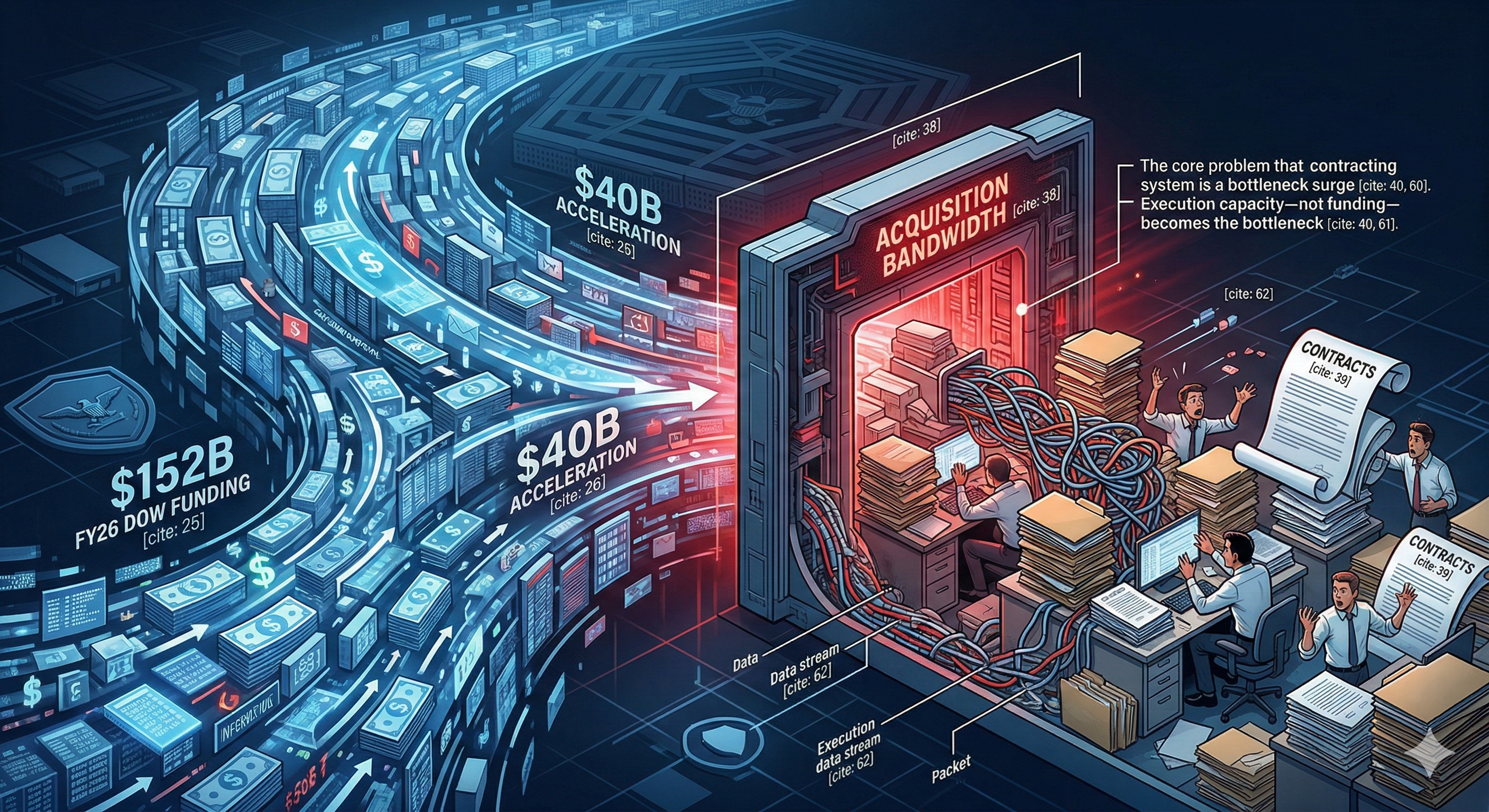
DOW now intends to obligate the full $152B in FY26, up from the originally profiled ~$113B.
That’s roughly $40B in accelerated obligation authority.
Important clarification:
This is not new money. It is timing compression.
The base FY26 discretionary request remains $848B. The reconciliation funds were already expected — the remaining balance is simply being pulled forward into FY26.
More money. Same fiscal year. No additional topline increase.
Where the Accelerated Funds Are Flowing
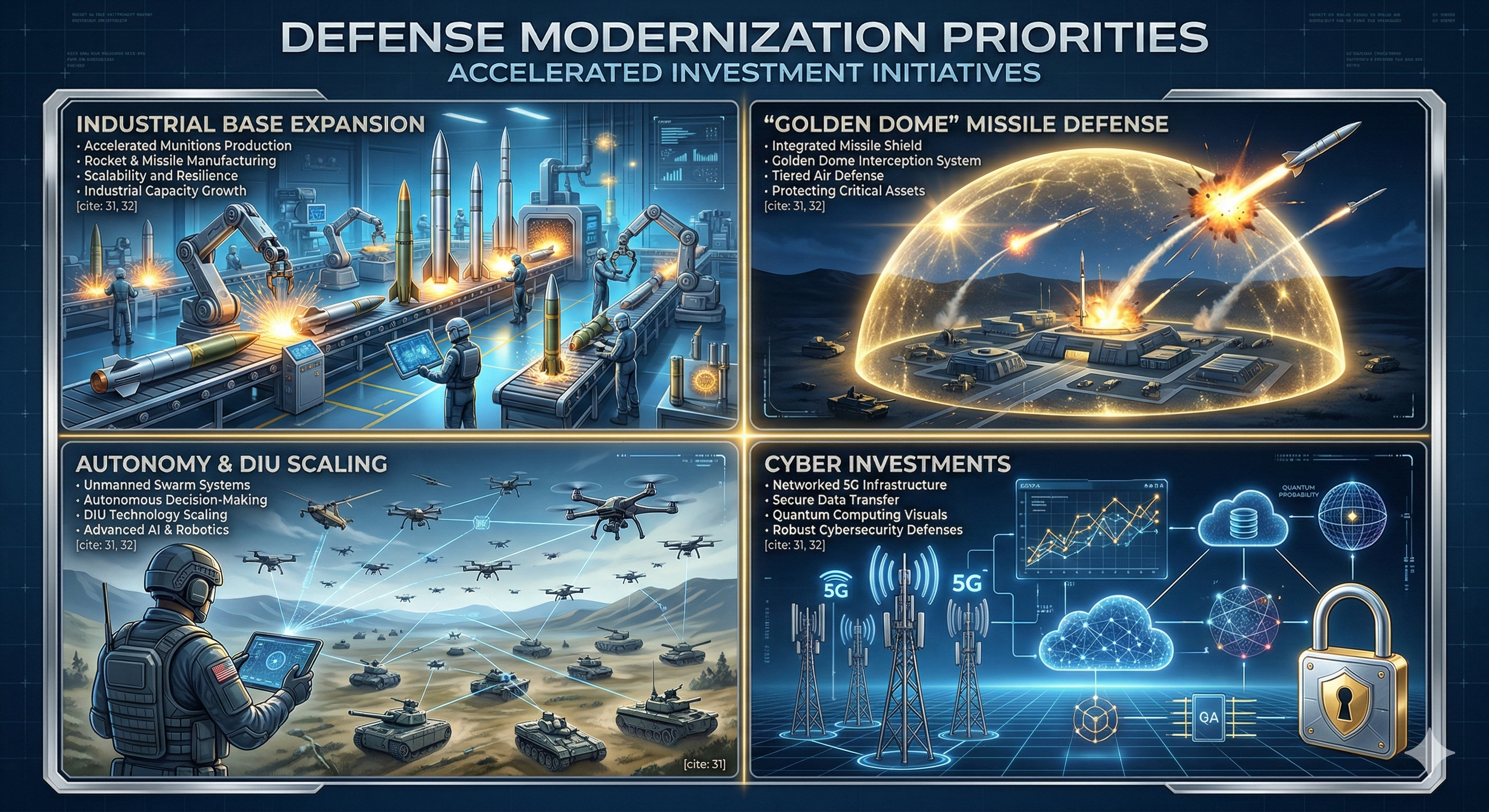
~$25B toward munitions and industrial base expansion
~$24B for missile defense under the “Golden Dome” umbrella
Continued scaling of unmanned systems, autonomy, and commercial tech via DIU
Additional investments in 5G, quantum, and cyber
These are not surprise categories — they reinforce existing modernization priorities.
The Real Impact: Timeline Compression
The practical effect for industry is a compressed contracting window.
Pulling $40B forward means:
More obligation activity competing for the same contracting officers
The same program offices
The same acquisition bandwidth
The same oversight workload
Execution capacity — not funding — becomes the bottleneck.
Who Benefits
Programs that are:
Requirement-complete
Budget-aligned
Through testing gates
Ready to award
Those move.
Programs still refining requirements or waiting on milestone decisions will not accelerate simply because funding arrived earlier.
What This Means for GovCon Firms
For growth-stage manufacturers and commercial entrants:
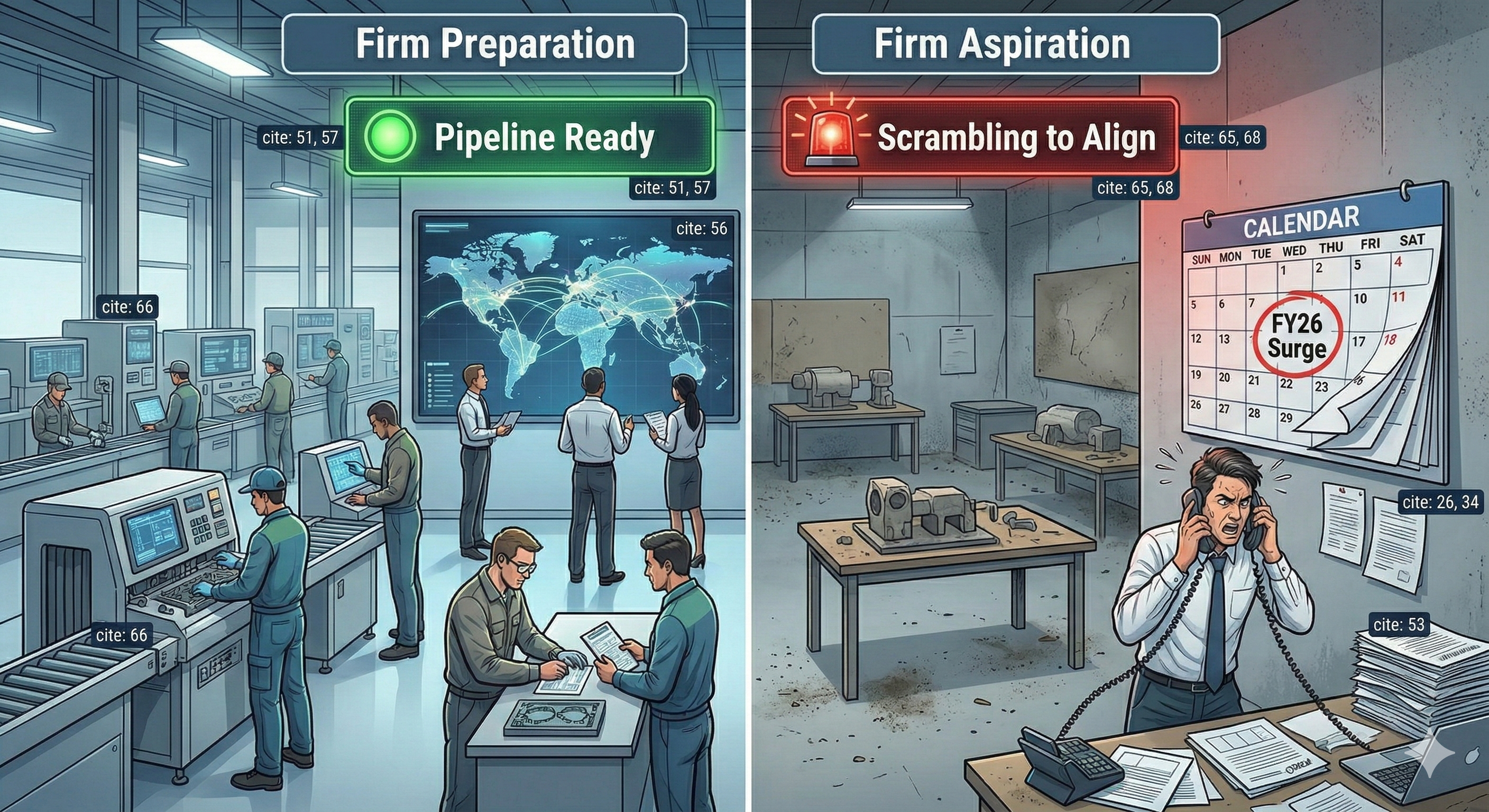
Acceleration rewards preparation, not aspiration.
Firms positioned to capture will already have:
Program office relationships
A defendable cost structure
Production capacity
Supply chain resilience
Contracting pathways identified (OTA, IDIQ, GWAC, etc.)
If you are not already in the pipeline, accelerated obligation does not create an entry point.
Bottom Line
The constraint in FY26 is not capital.
It is execution capacity across the acquisition system.
The firms that win in compressed cycles are those who:
Did their capture work early
Secured technical validation
Pre-aligned with buyers
Built operational readiness before the surge
Acceleration does not change the strategy.
It amplifies it.